Walk into most grocery stores on a weekend and the sampling table still looks the way it did twenty years ago: a folding table, a stack of tiny cups, and a brand ambassador hoping someone slows down long enough to try a bite. It’s a format that made sense when attention was cheap and shelves were less crowded. Neither of those things is true anymore.
FMCG and CPG brands are increasingly moving budget away from that model and into gamified, interactive retail experiences checkout challenges, mobile tour activations, pop-up games tied to product trial. The shift isn’t cosmetic. It’s a response to three hard problems that sampling tables were never built to solve.
Problem One: Sampling Doesn’t Scale Attention
A sampling table competes for attention with every other stimulus in a retail environment: signage, other shoppers, a shopping list, a ringing phone. The format asks for very little engagement and, in turn, tends to get very little engagement. Most shoppers walk past. The ones who stop usually take a sample and keep moving within seconds.
Gamified experiences change the attention math because they ask shoppers to participate rather than just observe. A checkout challenge, an instant-win moment, or a short interactive game creates a reason to stop that has nothing to do with whether the shopper was already planning to buy the product. The game itself becomes the draw, and the product trial or brand exposure rides along with it.
Problem Two: Sampling Generates No Usable Data
This is the bigger issue for marketing teams under pressure to prove attribution. A sampling table produces almost no data. You can count how many cups were handed out, but you have no idea who took one, whether they bought the product, or whether they’ll remember the brand a week later.
Gamified activations, particularly ones built around a mobile tour or in-store kiosk, can be structured to capture opt-in contact information, track participation, and tie a specific shopper interaction to downstream purchase behavior or a coupon redemption. For CPG brands running multi-market retail tours, that data is often the entire point. It turns a single in-store moment into a measurable line in a broader campaign report, rather than an anecdote about how many samples went out in Tulsa.
Problem Three: Sampling Doesn’t Travel Well Across Retail Formats
Sampling works reasonably well in a single-store, single-day context, but it breaks down as a multi-market retail tour strategy. Staffing, cup and product logistics, and health and safety requirements around food sampling all add friction and cost that scale badly across dozens of stores.
Gamified retail activations, especially ones built around a portable kiosk or mobile tour setup, scale more predictably. The build cost is largely fixed once the experience is designed, and the marginal cost of running it in an additional store is mostly staffing and logistics, not new samples printed or new perishable product shipped. That’s part of why CPG brands running national retail tours have leaned into formats like checkout-based challenges or interactive games that travel well between locations without needing a cold chain.
Sampling : What This Looks Like in Practice
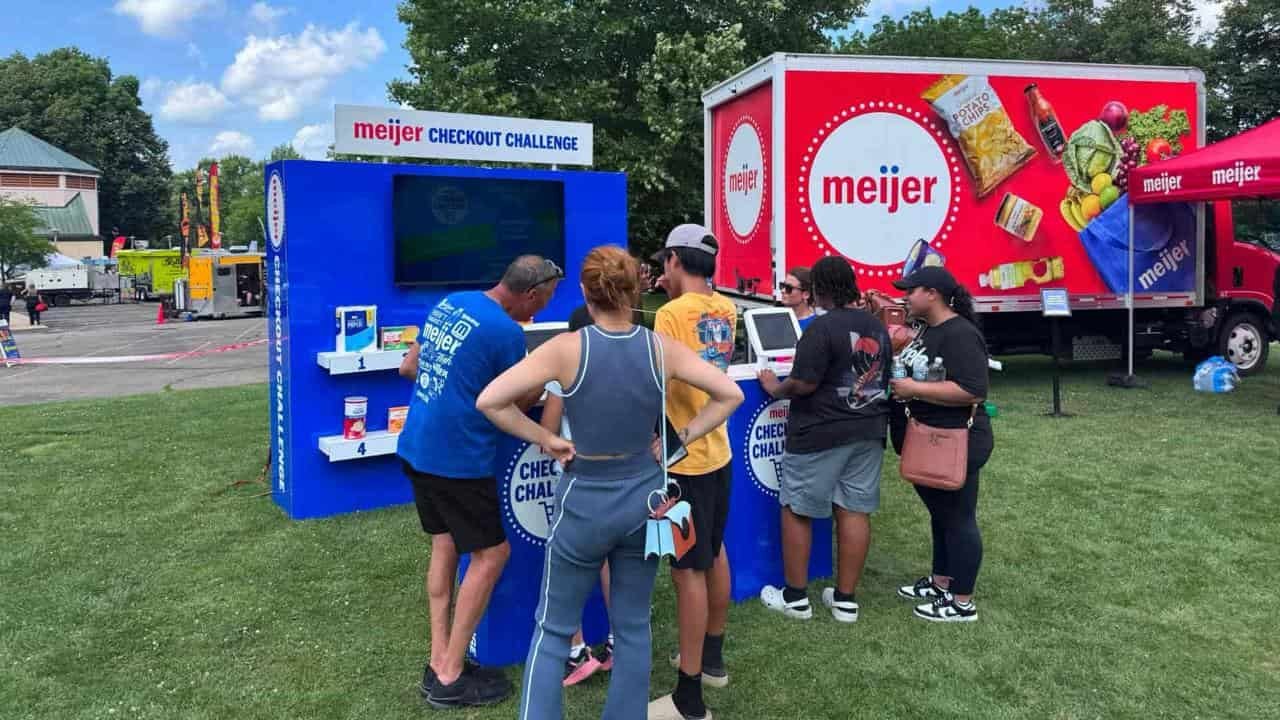
A few real-world shifts illustrate the pattern. Retail tours built around a checkout-adjacent interactive challenge, like a mobile grocery tour activation that turned checkout lines into a branded game moment, give shoppers something to engage with while they’re already in a purchase mindset, rather than intercepting them mid-aisle. Personal care and beauty brands running in-store pop-up activations have used interactive experiences to drive trial and social sharing simultaneously, getting more mileage out of a single in-store moment than a sample cup ever could. In both cases, the retail moment is designed to produce a measurable action a scan, an opt-in, a share rather than just a taste.
Sampling : The ROI Argument
The economics come down to cost per meaningful interaction, not cost per sample. A sampling program might report a low cost per unit sampled, but if there’s no way to tie that sample to a purchase or a data point, the number is close to meaningless for anyone trying to calculate actual campaign ROI.
Gamified experiences cost more upfront to design and build, but they generate an interaction that can be tracked, attributed, and followed up on. For a brand running a multi-market retail tour with a real marketing budget behind it, that difference measurable versus unmeasurable is usually the deciding factor.
The Takeaway
Sampling tables aren’t disappearing entirely; there are still categories, like food and beverage, where physical taste trial matters in a way no game can replace. But for a growing number of FMCG and CPG brands, the sampling table has stopped being the default retail activation, replaced by formats that ask shoppers to participate, capture data while they do it, and scale across markets without the logistics headache of perishable product. The brands making that shift aren’t chasing novelty. They’re chasing a version of retail engagement they can actually measure.