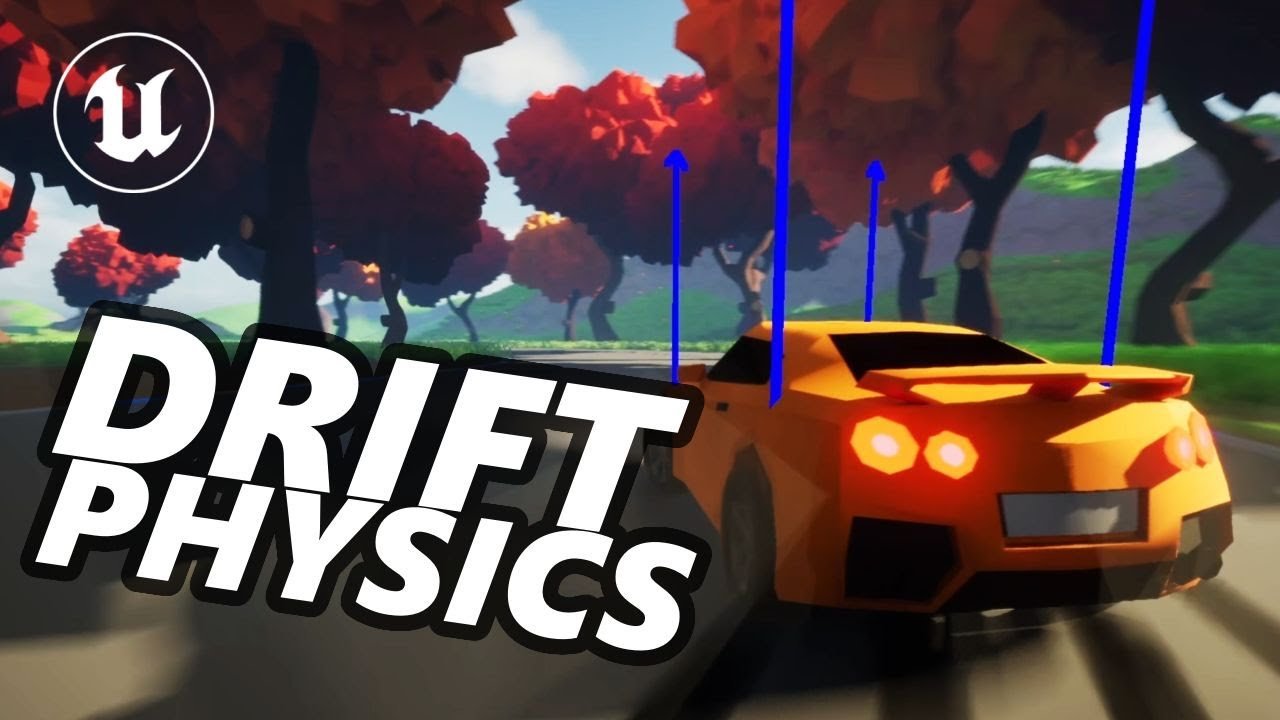
Let’s be real for a second. There is nothing quite as satisfying as throwing a car sideways at 80 miles per hour, smoke pouring off the rear tires, while you hold the perfect angle through a hairpin turn. It looks cool, it feels dangerous, and in video games, it makes us feel like driving gods. But here is the hard truth: most of us would crash immediately if we tried that in a real car.
I’ve spent way too many hours both in arcade racers and in serious hardcore simulations. The difference in how they handle drifting isn’t just a tweak in settings; it’s a completely different philosophy of physics. One wants you to feel like a hero with zero effort, and the other wants to punish you for not understanding how tires work.
Whether you are playing a quick game on https://wackygame.com/ or setting up a $2,000 direct-drive steering wheel for Assetto Corsa, understanding the code and physics behind the slide is fascinating. Let’s dig into the messy, smoky world of digital traction.
The Core Physics: Friction, Weight, and Momentum
Before we fight about which game is better, we have to look at what drifting actually is. In the real world, drifting is a balancing act. You are deliberately breaking the traction of the rear wheels (oversteer) while maintaining control of the car.
It boils down to three main things:
- Weight Transfer: When you brake or turn, the car’s weight shifts. Brake hard, weight goes front. Turn left, weight goes right.
- Tire Grip (Friction Circle): A tire can only give so much grip. If you use 100% of your grip to accelerate, you have 0% left to turn.
- Inertia: The car wants to keep going in the direction it was already moving, even if your wheels are pointed somewhere else.
In a game, the computer has to calculate all of this 60 to 100 times per second. Or, in the case of arcade games, it mostly ignores it.
Comparison: How Real Physics vs. Game Physics Handle Forces
| Force | Real World / Simulator | Arcade Game Logic |
| Gravity | Constant. Affects suspension compression and tire load accurately. | loose suggestion. Cars often stick to the road like magnets. |
| Tire Grip | Complex. Changes with heat, pressure, wear, and road surface. | Simple on/off switch. You either have grip or you are in “drift mode.” |
| Weight Transfer | Critical. If you don’t shift weight forward, the rear won’t slide easily. | Optional. You can usually initiate a drift just by tapping a button. |
| Steering Input | Counter-steering is required to catch the slide. | The game often counter-steers for you automatically. |
Arcade Drifting: The “Hero Mode” Physics
I love arcade racers. Think Ridge Racer, Need for Speed, or Burnout. These games aren’t trying to simulate a chassis; they are trying to simulate an action movie.
In these engines, the developers use a simplified physics model. They don’t simulate the air inside the tire or the temperature of the asphalt. Instead, they usually use a “state machine.” The car is either in a “Grip State” or a “Drift State.”
When you tap the brake or handbrake while turning, the game code flips a switch. Suddenly, the physics rules change. The car pivots around a central point, and gravity gets weirdly heavy to keep you on the track. You don’t need to counter-steer perfectly. In fact, if you try to counter-steer like a real driver in some Need for Speed games, you’ll actually crash. The game wants you to point the stick where you want to go, and it handles the complex geometry for you.
Why Arcade Physics Feels So Good
It’s instant gratification. You don’t have to practice for ten hours to make a corner.
- Speed: You can drift at 150mph, which is physically impossible for most real cars on normal roads.
- Forgiveness: You can mess up your entry angle and still save the drift.
- Visuals: It allows for exaggerated smoke and sparks that look cool but aren’t realistic.
The Downside of “Fake” Physics
| Feature | Pros | Cons |
| Drift Entry | Easy button tap. Accessible to everyone. | Teaches bad habits. Zero skill required. |
| Throttle Control | Mash the gas to go fast. | No nuance. You can’t steer with the throttle. |
| Collision | Bouncing off walls often helps you turn. | Removes fear of crashing. Makes racing sloppy. |
Simulation Drifting: The Unforgiving Math
Now we get to the scary stuff. Simulators like iRacing, rFactor 2, or Assetto Corsa don’t care about your feelings. They care about math.
In a proper sim, the tire model is king. The developers write complex algorithms to calculate how the rubber stretches and twists (slip angle). When you turn the wheel in a sim, the car doesn’t just turn. The rim turns, twisting the tire sidewall, which pulls the contact patch, which eventually generates force against the road.
If you mash the throttle in a sim as you do in an arcade game, you will spin out immediately. Drifting in a sim requires “throttle steering.” You are using the gas pedal to manage the slide angle, not just the steering wheel.
The Hardware Factor
You can’t really feel this on a gamepad controller. A controller has a tiny spring for the joystick. A car has thousands of pounds of force pushing back against the steering rack.
- Force Feedback (FFB): This is essential. In a real drift, the steering wheel naturally wants to spin in the opposite direction of the turn (self-aligning torque). A sim rig recreates this. If you don’t let the wheel spin through your hands, you lose the drift.
- Pedal Feel: In a sim, you need to feel exactly when the tires lock up.
Sim Rig vs. Controller: A Cost Comparison
| Component | Arcade / Casual Setup | Sim Drifting Setup | Realism Impact |
| Input | Gamepad (Xbox/PS5) | Direct Drive Wheel + Load Cell Pedals | Massive. You need FFB to feel the slide catching. |
| Display | Single TV | Triple Screens or VR | High. You need to look out the side window to see where you are going. |
| Handbrake | ‘B’ or ‘X’ Button | Analog USB Handbrake | Medium. Allows for precise pressure, not just on/off. |
| Cost | $50 – $70 | $500 – $3,000+ | N/A. But your wallet will feel the realism. |
The “Sim-Cade” Middle Ground
This is where most modern gamers live. Games like Forza Horizon or Gran Turismo sit right in the middle. They are the best of both worlds for many people.
They use real physics calculations for things like suspension and tire compounds, but they “smooth out” the harsh edges. They might add a hidden layer of stability control that you can’t fully turn off, or they might make the tires slightly grippier than real life so you don’t spin every five seconds.
I personally think this is the sweet spot for having fun without needing a PhD in mechanical engineering. You get the sense of weight transfer—you feel the car lurch forward when you brake—but you can still recover if you make a silly mistake.
Features of Sim-Cade Physics
- Accessible depth: You can tune tire pressure and camber, and it actually changes the handling.
- Gamepad optimized: They have clever filters that make a thumbstick act like a smooth steering wheel input.
- Rewind buttons: Let’s be honest, we all use them.
Troubleshooting Your Drift: Why You Keep Spinning Out
If you are trying to learn to drift in a sim or a sim-cade and you keep ending up in the grass, it’s probably not the game’s fault. It is usually one of three things.
1. You are too aggressive with the throttle
In an arcade game, gas means “go.” In a drift, gas means “spin.” If you floor it while the wheels are turned, the rear tires spin up too fast, lose all lateral grip, and the rear passes the front.
- Fix: Feather the throttle. Treat it like a dimmer switch, not a light switch.
2. You aren’t counter-steering fast enough
When the rear steps out, you have milliseconds to turn the wheel into the slide. If you are late, the car pivots too far.
- Fix: Let the wheel spin. In a sim with Force Feedback, you can literally let go of the wheel for a split second, and it will align itself. Catch it when it’s right.
3. Your car setup is trash
You might be trying to drift a stock family sedan with soft suspension and an open differential.
- Fix: You need a Limited Slip Differential (LSD). Without it, power only goes to the wheel with the least grip (the one spinning uselessly), and you won’t slide predictably.
Frequently Asked Questions (FAQs)
1. Can playing drift games teach me to drift in real life?
Yes and no. It teaches you the concept of counter-steering and weight transfer. Simulators like Assetto Corsa are used by pro drifters to practice muscle memory. However, games cannot simulate the fear of hitting a wall or the physical G-forces tossing your body around. You might know what to do with your hands, but your butt won’t know what’s happening until it’s too late.
2. Why is drifting slower than grip racing?
Friction. When you are drifting, you are spinning the tires. Sliding friction is generally lower than static friction (rolling grip). You are wasting energy making smoke and noise instead of pushing the car forward. Arcade games often boost the speed of drifters to keep it competitive, but in real physics, grip is always faster.
3. Do I need a steering wheel to drift in simulators?
For “hardcore” sims like iRacing or rFactor, yes. It is incredibly difficult to manage precise throttle and steering inputs with a tiny plastic thumbstick. For games like Forza or Grid, a controller is perfectly fine and often the intended way to play.
4. What is the “Pendulum Turn” or “Scandi Flick”?
This is a technique used to initiate a drift. You turn briefly away from the corner, then sharply into the corner. This swings the car’s weight aggressively, breaking traction at the rear without needing the handbrake. It relies entirely on accurate weight transfer physics, so it works great in Sims but often fails in basic arcade games.
Conclusion
The divide between arcade and simulation isn’t about which one is “better.” It is about what you want to experience. If you want to feel like an action hero escaping the cops with impossible slides, stick to the arcade titles. They are designed to deliver dopamine hits, not physics lessons.
But if you want to understand the violent, delicate dance of friction that happens when rubber meets the road, dive into the simulators. Just be prepared to crash a lot. The physics of drifting are complex, punishing, and incredibly rewarding once you finally link that perfect corner. Whether you are chasing high scores or perfect telemetry, just keep sliding.