
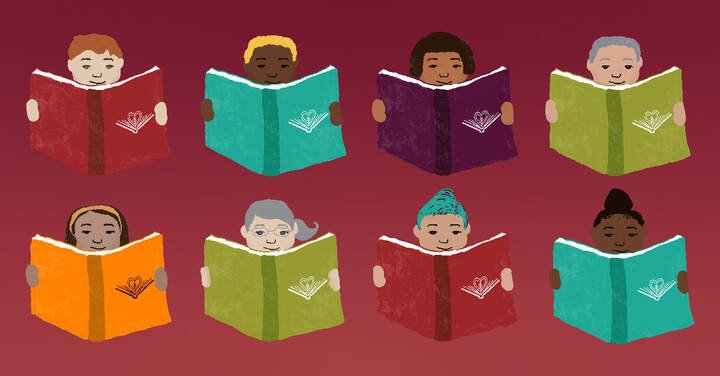
We often underestimate the power of a picture book. When we hand a child a story, we aren’t just giving them a way to pass the time before bed; we are handing them a map of how the world works and who matters in it. For a long time, I didn’t critically analyze the books I read or the stories I promoted. I assumed that a “good story” was universal. I was wrong.
When I look at the content available through platforms like Bahrku, I am reminded that children consume media differently than adults. They don’t have a filter for bias. They absorb what they see as absolute truth. If they never see a hero who looks like them, shares their family structure, or navigates the world with their specific physical abilities, they internalize a quiet but damaging message: they are the sidekicks in someone else’s story.
I have realized that building a library—whether for a home, a classroom, or an online collection like the Shop at Bahrku—requires intent. We cannot rely on nostalgia. Many of the “classics” I grew up with failed to represent the reality of the human population. Today, I want to discuss why accurate, respectful representation is not political correctness; it is a fundamental requirement for raising competent, empathetic, and confident children.
The “Mirror and Window” Dynamic
You cannot discuss diversity in literature without referencing the concept of “mirrors and windows,” originally coined by Rudine Sims Bishop. This framework changed how I evaluate every single manuscript or book I pick up.
A story acts as a mirror when a child sees their own culture, appearance, and reality reflected back at them. This reflection validates their existence. It tells them, “You are here, and you matter.” Conversely, a story acts as a window when it allows a child to look into a life they have never experienced.
The problem I often encounter is an imbalance. For decades, white, neurotypical children had thousands of mirrors and very few windows. Meanwhile, children from marginalized communities had nothing but windows and almost no mirrors. This creates a warped sense of reality for both groups.
Impact of Mirrors vs. Windows on Development
| Function | Impact on the “Insider” Child (Mirror) | Impact on the “Outsider” Child (Window) |
| Self-Worth | Increases confidence; validates their identity and lived experience. | N/A (serves as a learning tool rather than validation). |
| Empathy | N/A (focus is on self-affirmation). | Builds emotional intelligence by humanizing differences. |
| Social View | Reinforces that their story is “normal” or the default. | challenge stereotypes; reduces fear of the “unknown.” |
| Engagement | Higher reading retention because the context is familiar. | Expands vocabulary and cultural literacy. |
When I select books now, I look for this balance. If a child only reads about people who look exactly like them, they grow up intellectually isolated. If they never read about people like them, they grow up feeling invisible.
Moving Beyond Tokenism in Storytelling
One of the biggest pitfalls I see in modern publishing is tokenism. This happens when an author or publisher realizes they need “diversity,” so they change the skin color of a background character on the cover, but the story remains entirely unchanged.
I find this incredibly frustrating. Genuine representation affects the narrative. It influences how a character solves problems, how they speak to their elders, what they eat for dinner, and how they perceive danger.
For example, I once read a picture book where a character was visually depicted as being from a specific Southeast Asian culture, yet the character behaved, spoke, and interacted exactly like a suburban American child with no cultural nuances. It felt hollow. It was a “paint job,” not a person.
Identifying Authentic vs. Artificial Diversity
When I evaluate a story for inclusivity, I use a specific set of criteria to determine if the author actually did the work or if they are just checking a box.
- Role in the Plot: Is the diverse character driving the action, or are they just standing there to make the group look diverse?
- Cultural Specificity: Does the book embrace specific cultural markers (names, foods, traditions) accurately, or does it try to be “colorblind”?
- Stereotype Reliance: Does the character fall into lazy tropes? For example, is the Asian character the “smart one,” or is the Black character the “athlete”?
- Agency: Does the character solve their own problems, or do they need a “majority” character to save them?
Tokenism creates a false sense of progress. It allows adults to feel good about buying a “diverse” book without actually challenging the child to understand a different perspective.
The Psychological Impact on Young Worldviews
I have observed that children are not “colorblind.” By the age of three, children begin to notice physical differences. By age five, they begin to internalize societal attitudes toward those differences. This is why I argue that waiting until a child is older to introduce diverse books is a mistake.
If a child’s bookshelf is homogeneous, they naturally categorize anyone outside that norm as “other” or “strange.” Exposure to diverse narratives rewires this default setting.
Reducing Prejudice Through Narrative
Stories function as simulation runs for social interaction. When a child reads a book about a character in a wheelchair navigating a school day, they are practicing empathy. They aren’t just looking at the wheelchair; they are inhabiting the mind of the person in it.
I have noticed that children who read diverse books are less likely to stare or ask rude questions when they encounter differences in real life. They have already “met” someone like that in a story. The fear of the unknown is removed.
Key psychological benefits I focus on include:
- Normalization of Difference: Difference becomes just another trait, like hair color, rather than a dividing line.
- Complex Thinking: Stories with diverse characters often require readers to navigate complex social cues and cultural contexts, boosting cognitive flexibility.
- Emotional Resilience: For marginalized children, seeing characters overcome prejudice or simply exist joyfully provides a blueprint for their own resilience.
My Approach to Inclusive Storytelling
When I sit down to write or critique a story, I do not just ask, “Is this diverse?” I ask, “Is this true?” Writing outside of my own lived experience requires humility. I have learned that good intentions are not enough; you need rigorous research and a willingness to be corrected.
I avoid the “single story” narrative. For a long time, books featuring Black or Brown characters focused almost exclusively on the Civil Rights Movement or slavery. While history is vital, children also need to see themselves in the future, in fantasy worlds, and in everyday, boring situations.
The “Joy vs. Struggle” Balance
I actively audit the content I work with to ensure I am not perpetuating a narrative of constant suffering. If the only time a child sees a character like themselves is in a book about oppression, that is heavy baggage to carry.
Joy-based narratives are an act of resistance. Showing a diverse cast of kids solving a mystery, traveling to space, or just learning to ride a bike is powerful because it centers their humanity, not their trauma.
Comparison: Trauma-Based vs. Joy-Based Storytelling
| Feature | Trauma-Based Narratives | Joy-Based Narratives |
| Primary Focus | Historical struggle, oppression, or discrimination. | Everyday life, fantasy, adventure, or humor. |
| Emotional Tone | Serious, heavy, educational. | Light, exciting, relatable. |
| Reader Takeaway | “This group has suffered.” | “This group is just like me.” |
| Necessity | Essential for historical context. | Essential for humanization and normalcy. |
I strive for a ratio that favors joy and normalcy. We need both, but the scale has been tipped toward trauma for too long.
Analyzing the Types of Diversity
Diversity is a broad term. I think many people hear “diversity” and strictly think of race. However, true representation encompasses a much wider spectrum of the human experience. When I curate or create content, I look for intersections.
1. Neurodiversity and Disability
For years, characters with disabilities were relegated to “teaching moments.” The plot was about the disability. Now, I look for stories where a character might have autism or use a hearing aid, but the story is about them finding a lost treasure. The disability is present—it affects how they navigate the world—but it is not the sum of who they are.
2. Economic Diversity
This is rarely discussed, but class representation matters. Most children’s books feature middle-class families in suburban homes. I believe it is crucial to show children living in apartments, multi-generational households, or rural environments. It validates the lives of working-class families and prevents the assumption that a big house is the only “happy ending.”
3. Family Structure
Not every family has a mom, a dad, and two kids. I prioritize stories that show single parents, grandparents raising grandkids, foster families, and same-sex parents. When a child sees their family structure in print, the relief is palpable. It confirms that their family is “real.”
The Business Case: Why Diversity Improves Content Quality
Some critics argue that prioritizing diversity compromises the quality of literature—that it feels “forced.” I completely disagree. In my experience, embracing diversity raises the bar for storytelling.
When you write diverse characters, you cannot rely on clichés. You have to write deeper, more complex characters. You have to research settings and cultural dynamics. This results in richer, more vibrant worlds.
Engagement Metrics in Diverse Reading Environments
From what I have seen in educational settings, diverse libraries actually drive higher engagement. Students get bored with repetitive stories.
| Metric | Homogeneous Content | Diverse/Inclusive Content |
| Student Interest | Low to Moderate (repetitive themes). | High (novelty and relatability). |
| Class Discussion | Limited to surface-level plot points. | Deeper discussions on ethics, culture, and society. |
| Vocabulary | Standardized, often limited range. | Expanded to include global concepts and loanwords. |
| Relatability | High only for the majority demographic. | High across various demographics. |
Practical Steps to Curate a Representative Library
If you are a parent or educator looking to audit your shelves, do not just throw out old books. Instead, look at the gaps. I use a simple “audit” method to see whose voices are missing.
I recommend looking for these specific elements:
- Authors Own Voices: Look for books written by authors who share the identity of the main character. The nuance is almost always better.
- Modern Settings: Ensure you have books featuring diverse characters in modern times, not just historical figures like Martin Luther King Jr. or Rosa Parks.
- Visual Backgrounds: In picture books, look at the background characters. Is the crowd scene diverse, or is everyone identical?
- Genre Variety: Do you have sci-fi, fantasy, and mystery books featuring non-white protagonists?
Troubleshooting Common Objections
I often hear people say, “I just want to read good books, I don’t care about politics.” My response is that existence is not political. A child existing in a wheelchair is not a political statement. A child wearing a hijab is not a political statement. It is a demographic reality.
By excluding these characters, we are making a choice. Silence is an action. Excluding these characters suggests that the “default” human is white, able-bodied, and middle-class. That is simply factually incorrect based on the world we live in.
Navigating Sensitivity and Authenticity
When writing or discussing these topics, I am always careful about “appropriation.” There is a fine line between appreciating a culture and stealing from it.
If I am writing a character from a background different from my own, I have to accept that I have blind spots. I cannot just “imagine” my way through systemic racism or specific cultural coming-of-age ceremonies. This is why I advocate for sensitivity readers—experts or individuals from that community who review content for inaccuracies or offensive tropes.
This isn’t censorship; it’s quality control. Just as I would hire a historian to check facts for a book about World War II, I should trust a cultural consultant to check facts about a culture I am not part of.
FAQs
1. Does focusing on diversity mean we have to ban classic books?
No, absolutely not. I don’t believe in erasing history. However, I do believe in contextualizing it. You can read a classic book that has outdated stereotypes, but you must have a conversation with the child about it. Ask them, “Why do you think the author wrote the character that way? Would we write it that way today?” Use it as a teaching tool rather than a guide for behavior.
2. How do I introduce diverse books if my community isn’t diverse?
This is actually when it is most important. If a child lives in a homogeneous area, books are their only bridge to the outside world. Without these books, they may grow up unprepared to interact with a globalized workforce and society. Treat these books as adventures into the real world. You are preparing them for reality.
3. Are books with animals as main characters considered “diverse”?
While animal books are great for universal themes (like sharing or bravery), they do not count towards diversity goals regarding race or disability. A badger cannot represent the experience of a Black child or a child with Down syndrome. Using animals to avoid discussing race is a form of avoidance called “displacement.” Kids need to see human faces.
4. What if I accidentally choose a book that has bad representation?
It happens to the best of us. If you realize a book relies on stereotypes after you have started reading it, don’t just hide it. Use it as a critical thinking exercise. Ask the child, “Do you think this is how real people act?” It is okay to admit, “I picked this book, but I think it’s not very fair to the characters.” Modeling that learning process is valuable.
Conclusion
The landscape of children’s literature is shifting, and I believe it is for the better. We are moving away from a single, dominant narrative toward a rich tapestry of stories that reflects the actual world our children inhabit. Representation is not a trend. It is a necessary evolution of storytelling.
When we commit to diversity in literature, we are telling every child that their story is worth writing down. We are telling the child who feels invisible that we see them. And we are telling the child who is used to being the center of the universe that there is room for everyone else, too. That is a lesson that goes far beyond the bookshelf. It is the foundation of a better society.